Why an Outdoor Botanical Setting Elevates Your Celebration
The Natural Charm of Greenery and Florals
Few natural landscapes rival the Cape Floristic Region for botanical abundance, and a garden wedding venue draws directly from that living inheritance. Fynbos, proteas, and restios frame the ceremony with textures and colours that hired decor cannot replicate. The greenery also serves a practical purpose, and I have seen it transform how guests move and linger:
- absorbing background noise so vows are heard clearly
- softening harsh midday light for comfortable photographs
- creating a sense of enclosure without building walls
This natural architecture shifts throughout the day. Morning ceremonies carry dew and fresh scents, while afternoon receptions settle into dappled shade. A garden wedding venue delivers these changing moods at no extra cost, and that organic variation becomes part of the celebration itself.
What a difference the floral element makes! It anchors the visual identity of the occasion, from the archway to the table settings.
Versatility in Design and Theme
Most event venues impose their own silhouette on your day. A garden wedding venue hands you an open space where every design choice fits the terrain. I have watched a single lawn shift from a candlelit dinner to a dance floor in forty minutes. The colour scheme follows your mood, not the other way around. This versatility appears in three practical forms:
- Structured hedges offer clean backdrops for minimalist installations
- Wilder corners absorb bold colour schemes without clashing
- Varying elevations create natural sightlines for different seating layouts
Each element adapts to your theme, whether you favour draped linen or raw timber. The same ground that hosts a civil ceremony can host a festive reception without a single wall, which is the signature of this garden wedding venue.
Alfresco Photography Opportunities
The best wedding photographs are honest. They capture light, movement, and emotion without staging. A garden wedding venue gives you all three in abundance. Light here behaves differently than it does indoors. It filters through leaves, creating a dappled effect that flatters skin tones and softens shadows. I have watched photographers settle into a rhythm they do not find inside.
Alfresco photography rewards spontaneity. The breeze lifts the veil at the exact moment your photographer clicks the shutter. A petal lands on the groom’s shoulder. These scenes cannot be staged in a ballroom.
The practical benefits are measurable:
- Open shade under mature trees keeps your guests comfortable during long portrait sessions
- Natural elevation changes frame the couple against layered greenery
- Ponds and fountains introduce reflective surfaces for creative compositions
These grounds shift their palette with the seasons. Spring offers fresh green and blossom; autumn brings muted gold and rust. The result is a wedding album with variety.
Seasonal Ambiance and Sensory Appeal
December in the Cape means the sun sets late and the air carries a specific sweetness from blooming acacias. A garden wedding venue shifts its personality entirely with the calendar. What felt like a shaded retreat in October becomes a sun-drenched gathering space by February.
Sound matters too. Wind through leaves creates a natural white noise that makes guests lean in during vows. Birdsong punctuates silences. The scent of freshly cut grass and jasmine replaces the stale air of a hotel ballroom.
- Seasonal blooms dictate your colour palette with zero styling effort
- Evening temperatures drop gracefully, easing the transition to dancing
- Foliage absorbs sound, preventing the hollow echo common in marquees
Your guests will remember how the evening felt long after the flowers fade. A garden wedding venue delivers an experience no indoor room can replicate.
Key Features to Look for in an Outdoor Ceremony Space
Covered Options for Unpredictable Weather
One moment the Cape sun blazes, the next a southeaster rolls in. That single reality reshapes how couples choose a garden wedding venue. When evaluating an outdoor ceremony space, look beyond the manicured hedges. Ask about the covered options for unpredictable weather, because a sudden shower should not turn your vows into a mud bath! A quality venue will offer a permanent structure like a thatched lapa or a freestanding marquee with high clearance. Check that the flooring remains dry and grippy. Also consider these practical elements:
- Wind rated side walls that can drop quickly
- Drainage channels that redirect runoff away from guests
- Secondary shelter for the caterers and the bar
Clear roofing panels let in natural light while keeping the rain out. Most importantly, inspect the backup plan yourself. A covered space that feels like a dark tent can ruin the garden atmosphere. Instead, look for translucent panels, open sides, and adjustable shading. These features preserve the alfresco feel of your garden wedding venue without sacrificing comfort.
Accessibility for Guests of All Ages
Accessibility often determines whether every loved one can share your special day. A thoughtful garden wedding venue considers guests with mobility aids, older relatives, and young children. The ceremony space should have firm, even pathways that do not turn to mud after irrigation or rain. Gravel looks charming but is difficult for wheelchairs and walkers; opt for compacted stone or paved routes connecting parking to the ceremony lawn.
Seating arrangements also matter. Provide a mix of chairs with armrests and benches, all placed on stable ground. Designate a clear viewing area for wheelchair users, integrated with the aisle rather than relegated to the back. Check the gradient: a slight slope is manageable, but steep hills exhaust guests. Ask about accessible restrooms located near the ceremony area, and confirm their doors are wide enough for assistance devices.
When visiting, note these details:
- Ramp availability at every step, even small ones
- Shaded rest stops along long walkways
- Staff trained to assist guests with special needs
These features ensure your garden wedding venue feels welcoming to everyone, creating a comfortable experience from arrival to recessional.
Sound and Lighting Infrastructure
Sound travels differently under open skies. A gentle breeze can carry the officiant’s words away from the front row, and distant traffic can interrupt your vows. Before booking a garden wedding venue, test the acoustics during a site visit. Clap your hands near the ceremony spot and listen for echo. Ask whether the venue supplies wireless microphones and weatherproof speakers, and where they position them for even coverage.
Lighting shapes the mood long after the sun drops behind the trees. A garden wedding venue should offer layered illumination that guides guests along pathways and frames the ceremony focal point without blinding anyone. Ask to see the space at dusk, because that is when the infrastructure proves itself.
- Uplighting on trees or garden walls to add depth
- Dimmable fixtures for the shift from ceremony to reception
- Generator backup or accessible power points near the stage area
These details matter more than decorative charm. If the venue cannot amplify your vows clearly or soften the evening light, the beauty of the garden fades into frustration.
On-Site Coordination and Staff Support
Couples spend an average of 30 hours coordinating vendors on their wedding day. A garden wedding venue with a dedicated on-site coordinator removes most of that burden. You gain a professional who knows the property, the light, and the quiet spots for last-minute touch-ups.
The right team manages vendor load-in schedules and guest flow so you stay present. When you visit a potential site, ask about contingency plans. A strong coordinator will explain how they handled a power failure or a sudden gust of wind at a previous event.
- Who directs the ceremony rehearsal?
- How many staff members are on duty during the event?
- What is the procedure if a key vendor fails to arrive?
You need a point of contact who anticipates problems while you focus on the moment.
Parking and Transportation Convenience
When you choose a garden wedding venue, spare a thought for how your guests will arrive. A scenic driveway may impress, but a muddy path or a single narrow entrance can cause delays and frustration.
Look for a venue with clear signage and a well-marked parking area. Ask if they offer valet or shuttle services, especially for elderly guests or those traveling from distant towns. In South Africa, summer storms can turn gravel lots into quagmires, so check the surface and drainage.
- Is parking free and within 200 meters of the ceremony?
- Are there designated drop-off points for taxis or ride shares?
- Does the venue coordinate with local transport providers?
I once attended a wedding where guests parked along a busy highway. That garden wedding venue lacked a turnaround area, so cars backed up for twenty minutes. Practical parking arrangements are not glamorous, but they define the beginning and end of your celebration.
Creative Layouts and Decorative Ideas for Botanical Celebrations
Ceremony Archways and Natural Altars
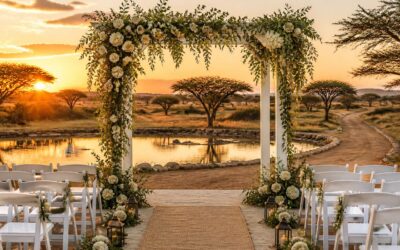
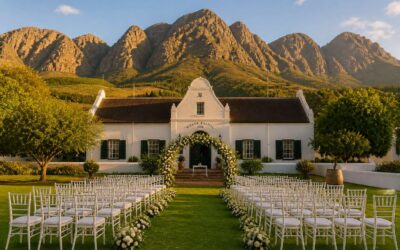
Every botanical celebration deserves a stage that emerges from the earth itself. A garden wedding venue becomes theatrical when ceremony archways are crafted from local materials. Weave silver oak branches or dried restios into a rounded frame; let the arch tilt slightly, as if grown by accident. Position it to capture the afternoon light through jacaranda leaves, creating moving patterns on the couple.
Natural altars need no imported marble. Use stacked sandstone slabs, a fallen acacia trunk, or a mound of moss with scattered aloe blooms. These elements anchor the vow exchange. Flow becomes the guiding principle of this garden wedding venue, where every layout decision follows the land.
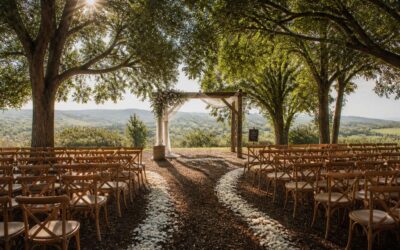
- Curved rows of wooden chairs follow the archway’s shape.
- Potted grasses flank the altar, softening the transition from lawn to ceremony space.
The result feels organic, as if the garden chose the moment.
Long Table Dining Under Canopies
A long table set beneath a canopy does more than feed guests. It turns a garden wedding venue into a landscape of shared moments. Place tables along the existing contours of the lawn, under the reach of an oak or the stretch of a sailcloth roof. Let the path between courses follow the garden’s own meander.
Decorative choices should honour the setting. Use textured linen in olive and sand tones, runners of eucalyptus and wild rosemary, and low brass vases that never block a conversation. Each table group can hold its own arrangement of candelabras and stoneware.
Add hanging elements to draw the eye upward:
- Botanical chandeliers woven from vine and suspended blooms
- Smoked glass goblets that catch the late afternoon light
- Bare branches as place markers, tagged with handwritten names
The canopy itself becomes a filter, softening the sun and letting dappled shadows move across plates. In a South African garden, that light is the real decor.
String Light and Lantern Installations
At a garden wedding venue, the transition from daylight to dusk is where lighting does its real work. String lights threaded through branches create warm points overhead, while lanterns ground the space with a softer glow. The installation should follow the garden’s existing geometry, not fight it. Hang lights along pathways, between trunks, or over a dance floor.
Consider layering light sources for depth:
– Hurricane lanterns on tables, filled with citronella candles
– Paper lanterns suspended at varying heights
– Ground level stake lights along the edges of planting beds
I find this mix lets guests move from bright conversation zones to shadowed corners without a single harsh bulb. In South African gardens, the evening breeze moves the lights gently, and shadows shift across the lawn. A garden wedding venue becomes a sequence of intimate vignettes, each shaped by the placement of light.
Seasonal Flower Pairings and Centerpieces
Every garden wedding venue in South Africa carries its own botanical signature, from wild olive trees to strelitzias. I position tables around these existing specimens, placing guests with sightlines toward the best views. A circular arrangement beneath a spreading acacia encourages conversation, while a central runner of potted succulents draws the eye along the table.
Seasonal flower pairings change with the calendar. In spring, white arum lilies combine with yellow clivias. For autumn, proteas and restios hold their form in gusty conditions. A garden wedding venue gives you this variety, but centerpieces should echo the surrounding plant life, not compete with it. For instance:
- Low bowls of wild grasses with a few rose stems
- Glass jars of pineapple lilies and local berries
- Stacked stone slabs holding candlelit blooms
Interactive Lawn Games and Lounge Areas
I arrange low lounge seating beneath the canopy of a yellowwood tree to create a relaxed gathering spot. Vintage crates, linen cushions, and worn leather poufs form conversation clusters. Guests gravitate toward these comfortable areas between dances and toasts.
For interactive moments, I position lawn games along the edges of the celebration area.
- Wooden ring toss sets near the herb garden
- Oversized jenga blocks under a shaded marula tree
- Bocce ball lanes mowed into the grass verge
A garden wedding venue rewards this kind of spatial planning. The topography naturally separates quiet corners from active zones, so I let the existing contours guide where guests gather. Every garden wedding venue I work with presents a different puzzle of pathways, trees, and water features, and I arrange furniture around those fixed elements rather than imposing a rigid floor plan.
How to Choose the Perfect Outdoor Venue for Your Budget
Peak Season Pricing and Off-Peak Savings
A garden wedding venue in South Africa rarely carries a single flat rate. Peak season pricing, spanning late spring through autumn, inflates the total by 30% or more. Off-peak savings become tangible when couples accept cooler afternoons or shift to a weekday. The same manicured hedges and oak canopies cost considerably less from May to August. Consider what you sacrifice. A winter ceremony loses the long daylight but gains a moody, dramatic sky.
Budget-conscious couples often find that a base fee hides further variables.
- Staff minimums for Saturday evenings.
- Per-table linen upgrades.
- Corkage fees for outside wines.
- Heater or marquee hire for cooler months.
An affordable January quote may exceed your ceiling in November. Comparing quotes requires requesting the off-peak tariff explicitly. Most venues reserve their best rates for the quiet months, but they rarely advertise them.
All-Inclusive Packages Versus À La Carte Services
Between the all-inclusive package and the à la carte menu lies a decision that shapes your entire garden wedding venue experience. The former binds your budget into a single figure, offering certainty across catering, staffing, and decor. The latter presents an itemised list and demands you anticipate every hidden cost.
Consider how your choices echo through the day:
- All-inclusive rates absorb the cost of tables, linens, and service staff into one number, protecting you from unexpected fees.
- À la carte allows you to direct funds toward specific elements, such as a string quartet or a bespoke floral installation, while trimming elsewhere.
For a garden wedding venue in South Africa, the calculation changes with the season. Ask which services remain fixed and which can be removed. The answer reveals the true extent of your budget.
Hidden Fees and Deposit Structures
Choosing a garden wedding venue without inspecting its deposit structure is a gamble. The quoted price rarely tells the whole story. In South Africa, deposits often range from 30% to 50% of the total, and the balance falls due weeks before the ceremony. That timing matters more than the number itself.
In our experience, a sensible venue itemises what the deposit covers and what it does not. Watch for the quiet additions: security guards for the parking field, generator fuel for the sound system, or a cleaning fee that appears after the last guest departs. Ask for the policy in writing.
- Request a schedule of payment dates.
- Confirm whether the deposit is transferable.
- Ask which expenses are invoiced after the event.
The garden wedding venue that answers these questions without hesitation is the one you can trust with your budget.
Value-Added Amenities to Negotiate
The venue quote rarely includes the amenities that make a celebration comfortable. We have watched couples negotiate a garden wedding venue down to the last rand, only to discover that the upgraded restroom trailer costs extra. That is the wrong fight.
Instead, negotiate the items that improve the experience directly. Ask about day-before access for setup. Request a complimentary suite for the couple to get ready. Some venues will throw in vendor meals or a champagne toast if you phrase the question as a favour rather than a demand.
– Extra cocktail tables for the bar area
– Waived corkage fees
– A dedicated point person during load-out
The right garden wedding venue will say yes to at least one of these. The mediocre one will say no to all. That answer tells you more than any brochure ever will.
Questions to Ask Before Booking an Outdoor Celebration Space
What Is the Rain Plan?
On a humid Highveld afternoon, the sky can turn from cerulean to charcoal in minutes. Before you sign for that garden wedding venue, ask the coordinator to explain their rain protocol. The answer should name a specific fallback space, not a vague promise. You also need to know who decides when to move the celebration and how that decision reaches your vendors.
Consider these three details:
1. Is the indoor backup included in your current quote, or does it trigger an additional fee?
2. How much notice will you receive before the venue activates the rain plan?
3. Are there restrictions on decor, dancing, or catering within the alternate space?
Are There Noise Restrictions or Curfews?
Every South African municipality has a noise regulation, but most couples discover this after the first complaint. A garden wedding venue might feel secluded, yet municipal bylaws and residential neighbours can impose limits that change your entire timeline.
Ask the venue manager for the exact decibel threshold and curfew, then put it in writing. Does the restriction apply to amplified music, live bands, or the afterparty? Some venues hold a special event permit that extends hours; others do not.
- What time must music stop, including the DJ breakdown?
- Are there quiet zones where guests cannot gather?
- Who is liable if a neighbour files a complaint?
These answers determine whether your first dance happens at sunset or under stars. The quiet hours affect your budget as much as the catering.
Which Vendors Are Approved or Preferred?
Before you sign anything, ask which vendors are approved or preferred at your garden wedding venue. Many venues restrict caterers, decorators, and rental suppliers to protect the lawns and comply with municipal fire safety rules. An external vendor might be allowed, but only after paying a buy-in fee or providing proof of liability insurance.
Compare the preferred list against your own shortlist:
- Does the venue charge a corkage fee for external caterers?
- Are photographers obliged to use specific lighting equipment?
- Can you bring your own wedding planner, or must you use the in-house coordinator?
Whatever answers come back, request them in writing. The grounds staff will usually manage load in and load out for approved suppliers, which prevents damage to the landscaping and keeps the entire day running on schedule.
What Is the Guest Capacity for Different Areas?
Guest capacity is never a single figure, and it is the first question I raise. A garden wedding venue may quote 150 guests for a seated dinner, but that same lawn might comfortably hold only 90 for a ceremony with chairs in rows. The terrace, the lawn, the indoor conservatory, each zone has its own physical limit.
- How many guests can stand comfortably on the lawn during the ceremony?
- How many seated guests fit under the covered patio?
- Does the dance floor count toward the total capacity?
Ask the venue coordinator to walk each area with you and confirm the maximum per section. Fire safety regulations often cap the number, and that cap can differ between open-air and covered spaces. Also ask whether the listed capacity includes staff, the catering team, or musicians. A single guest count is never enough to plan with.
Are There Restrictions on Decor or Rentals?
Most couples assume a garden wedding venue allows any decoration they can dream up, but the reality often differs. I once toured a lush property where the owner politely pointed to a century old oak and said, “No nails, no wire, no string.” That moment taught me to ask every restriction question before signing a contract.
The answers shape your entire design plan. Some spaces permit hanging lanterns from branches, while others require freestanding structures. Open flames are a common sticking point, especially during dry Cape summers. Confetti and rose petals may seem harmless, but many venues ban them for environmental reasons.
Before you book, ask the coordinator directly:
- Can we hang lights, fabric, or decorations from trees or pergolas?
- Are candles, tiki torches, or other open flames allowed?
- Do you restrict confetti, petals, or biodegradable alternatives?
- Must we use your preferred rental suppliers, or can we source our own?
These details affect both your budget and your timeline. A garden wedding venue often looks flexible, but hidden rules can limit your creative freedom. Knowing them early prevents disappointment later.
How Much Setup and Teardown Time Is Included?
Most couples underestimate the hours needed to transform a garden wedding venue into their dream scene. One property manager once told me that setup crews often arrive at dawn and leave after midnight, yet the contract only allots four hours.
Ask the coordinator these precise questions before signing:
- When does our rental window officially begin and end?
- Is setup and teardown included in the base fee or charged hourly?
- Can we access the site the evening before for staging?
These answers determine whether you need to hire extra hands or negotiate overtime. A garden wedding venue may look idyllic, but tight turnaround windows create stress. Knowing the schedule helps you plan deliveries, vendor arrivals, and guest flow without last minute chaos.

0 Comments